
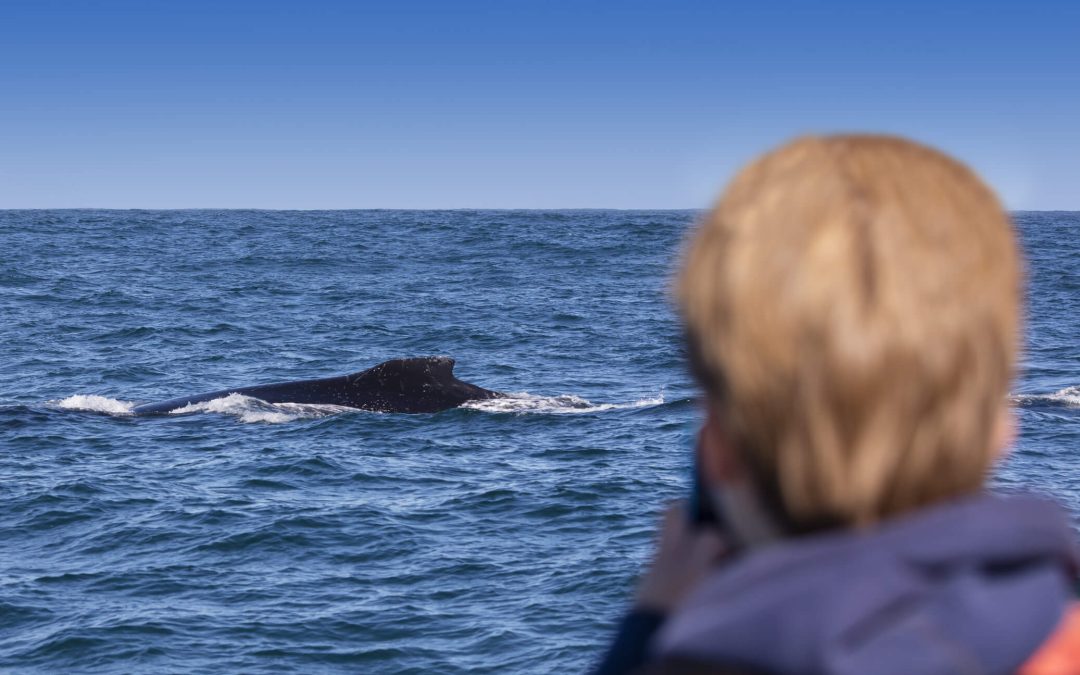
A whale shows itself for a few seconds at a time, usually in a spot you did not predict, while the boat under you is moving. That is why whale photos are harder than they look, and why the keepers tend to come from being ready, not from being lucky.
Dana Point adds a few conditions of its own: coastal light that changes through the day, bright glare off open water, and a boat deck that sees plenty of wind and spray. This guide covers the basics that work on any phone or camera, then the details that matter most on a Dana Point trip.
Start With the Right Expectations
You cannot schedule a breach. What you can do is control readiness: a clean lens, settings chosen before the first sighting, and a habit of watching the water and not only the screen. Most great wildlife photos are ordinary frames taken at the right instant, which means shooting in short bursts when something happens beats filming everything and hoping.
Phone or Camera?
Be honest about what your gear can do. A phone is excellent for the wide moments: the boat, the coastline, a dolphin pod close to the hull, and video that looks great on a screen. Anything showing detail on an animal far from the boat needs real zoom reach, which means a dedicated camera with a zoom lens.
For a phone, a few habits make the biggest difference:
- Wipe the lens before the first sighting. Sea spray leaves a haze you won’t notice until you review the photos.
- Tap on the animal, or the spot where it will surface, so the phone focuses on the whale and not on the sky or the boat.
- Use burst mode, and avoid digital zoom, which lowers image quality. Crop later instead.
- Keep the phone in a waterproof pouch with a lanyard. Our guide on what to wear and bring on a whale watching tour in Dana Point covers it.
For a camera, prioritize shutter speed. You are shooting a moving animal from a moving boat, so start around 1/1000 of a second or faster, use continuous autofocus and burst mode, and let auto ISO handle the changing light. Start a little wider than you think you need, so a sudden breach does not leave you cropping off the tail.
Reading the Light Off Dana Point
Light is the biggest variable on the water. Along the Southern California coast, a marine layer often leaves mornings soft and gray, which can flatten color but cuts harsh glare and shows detail on dark animals well. When the sun comes out and climbs, the water turns into a bright mirror, and exposure gets harder: tap on your subject so your phone doesn’t expose for the sparkling background. Polarized sunglasses help your eyes spot fins and flukes, and a polarizing filter can do the same job for a camera.
Late-afternoon and evening light is warm and low, which flatters both the animals and the coastline. Wherever the sun sits, try to keep it behind you or off to the side so it lights the animal instead of silhouetting it.
Shooting From a Small, Fast Boat
A private boat with open decks gives you great sightlines, but it also puts you closer to the wind, spray, and vibration. A few habits help:
- Plant your feet, bend your knees slightly, and tuck your elbows in against your body to steady the shot.
- Take your best shots when the boat slows or idles near animals, not while it is running at speed.
- Stay wide while you search, then zoom in only once an animal is in frame.
- If the captain points you toward a particular side of the boat, move early. Good positions fill fast.
What Different Animals Need
Dolphins are fast and unpredictable, so burst mode and a wide frame work best. They often travel in large groups, which makes for great photos, but also means the action can pop up anywhere around the boat.
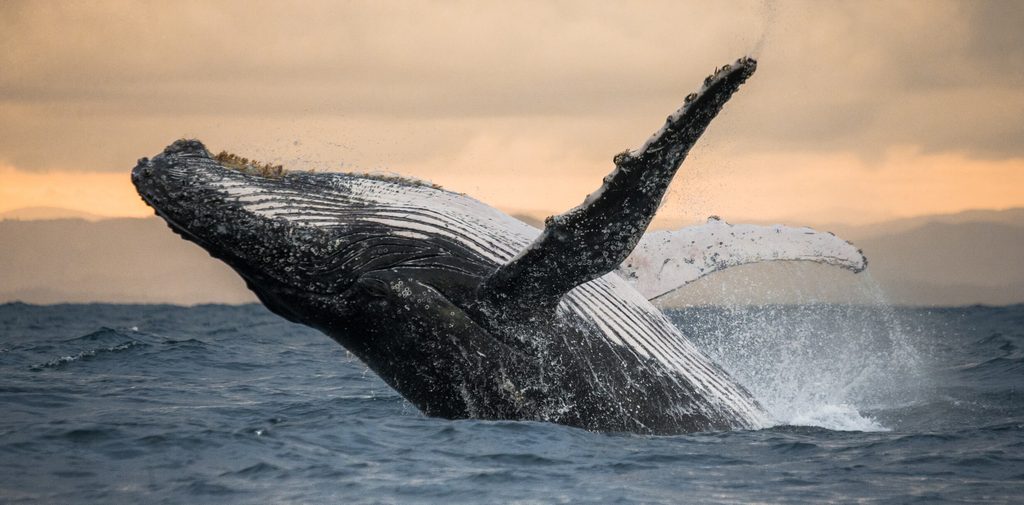
Humpback whales reward patience and anticipation. When a humpback lifts its tail before a dive, it is usually heading down for a while, which gives you time to reset and scan the water. Our guide to humpback whale watching in Dana Point explains the behaviors worth watching for.
Blue whales are about scale, not acrobatics. A wide shot or short video clip showing how long the back keeps rolling past tells the story better than a tight crop.
Sea lions and seabirds are the easy wins. They are often close and cooperative, so they are a good way to warm up before the bigger moments.
Photography Rules That Protect the Animals
The best photo never requires the boat to get closer. According to NOAA Fisheries photography and video guidelines, you may photograph or film marine mammals as long as the recommended viewing distances are followed and the animals are not disturbed. NOAA also advises against selfies with marine mammals, since getting close for a photo can harass animals and put people at risk. It additionally advises against flying drones near them, because the noise and proximity can cause stress.
That is why a good captain keeps a respectful distance and lets animals come to the boat, and why a long lens is worth more than an urge to move closer. Our guide on what to expect on a private whale tour explains how encounters work.
Put the Camera Down for a Minute
Take your shots, then lower the camera and just watch. A breach lasts a second or two, and the memory of seeing it with your own eyes is the one you will keep longest.
Ready to Capture Your Trip?
The best whale photos come from time on the water with a captain who follows the action. If you are exploring private whale watching tours in Dana Point, Pacific Whale Tours Dana Point can help you choose the trip length and season that fit what you want to see and shoot. Reach out to the captain to talk through your dates and your group.
Frequently Asked Questions
What camera settings are best for whale photos?
Prioritize a fast shutter speed, starting around 1/1000 of a second or faster, with continuous autofocus and burst mode. Auto ISO helps when the light changes quickly on the water.
Can you get good whale photos with a phone?
Yes, especially for wide shots, close encounters, and video. Tap to focus on the animal, use burst mode, avoid digital zoom, and keep your lens clean. For detailed shots of animals far from the boat, a camera with a zoom lens does better.
What is the best time of day for whale watching photos in Dana Point?
It depends on the look you want. Mornings often bring softer light and less glare, midday is bright with strong reflections off the water, and late afternoon offers warm, low light. The best light is whatever lets you keep the sun behind or beside you.
Can I bring a drone on a whale watching tour?
It is best to leave it at home. NOAA advises against flying drones near marine mammals because the noise and close proximity can harass them, and federal aviation rules also apply to drone operation.